This month marks the 40th anniversary of the Reykjavík summit between U.S. President Ronald Reagan and Soviet leader Mikhail Gorbachev. Though they left without reaching agreement, the 1986 meeting was a turning point when long-time adversaries turned away from recurrent crisis, toward unprecedented cooperation. In a rare moment, two superpower leaders imagined a world without nuclear weapons and convinced each other that’s what they genuinely wanted.
Today, the nuclear landscape is more complicated and dangerous. The bipolar Cold War has fractured into a complex multipolarity. The conventional standoff in Europe has been replaced by Russia’s war against Ukraine. The stabilizing effects of trade have been disrupted by sanctions and tariffs. Meanwhile, artificial intelligence (AI) is being rapidly integrated into global security. Great power leaders hold performative summits with little preparation or meaningful results. What would it take for them to negotiate bold, mutually beneficial agreements again?
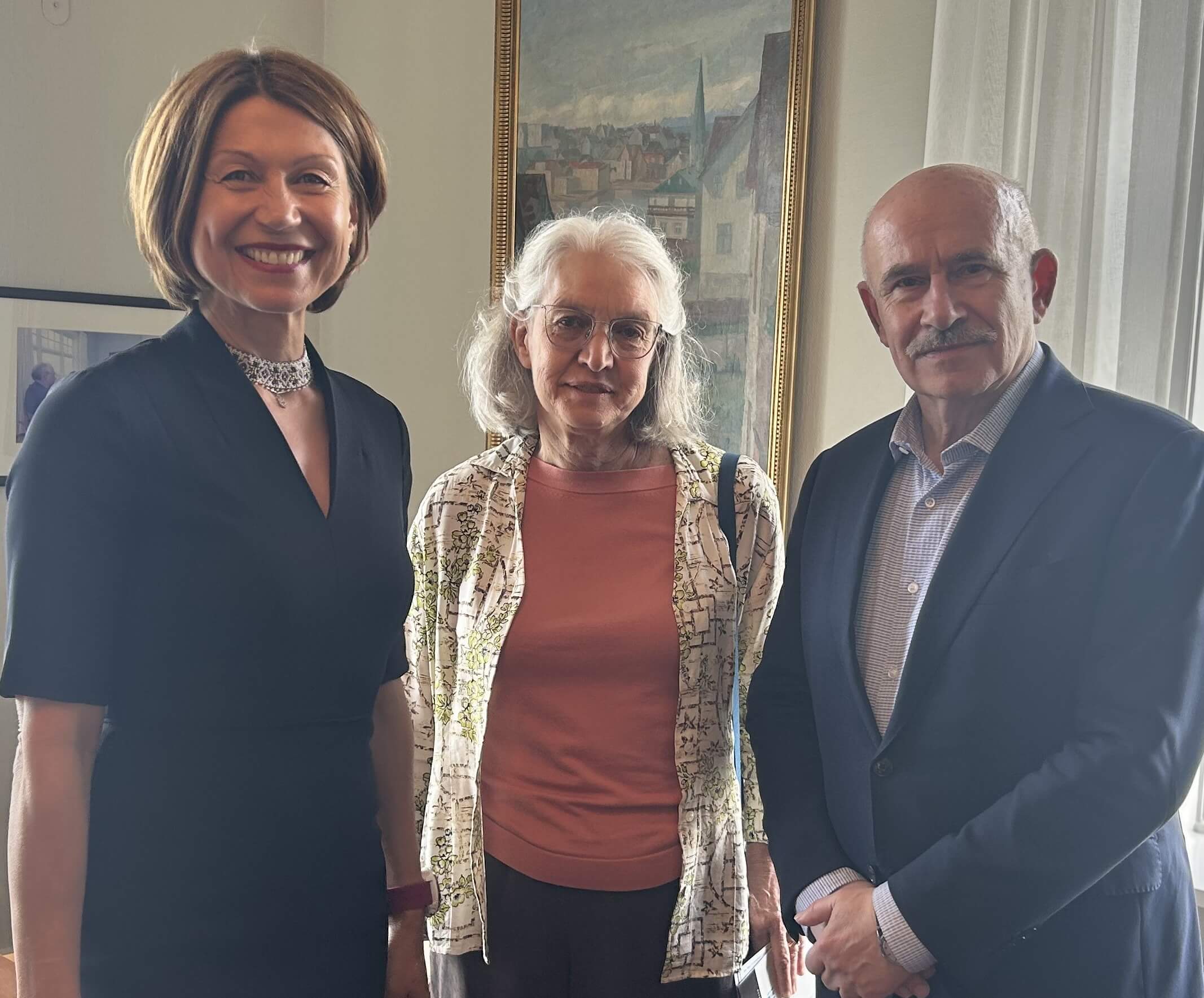
To unpack these challenges, Dr. Nancy Gallagher, Director of the Center for International and Security Studies at Maryland (CISSM), traveled to Iceland for the 5th annual Arms Control Negotiation Academy (ACONA) conference. Focused on security risks and opportunities in the AI era, the conference featured senior officials, leading experts and mid-career professionals from around the world who had just completed ACONA’s year-long negotiation fellowship program.
Iceland’s Secretary of State highlighted how a tiny island can help change history by offering a place where world leaders can stop posturing and start talking about what they really want to accomplish together. Ambassadors from Canada, Finland and Germany then had a spirited conversation with Icelandic officials about how small and middle powers can cooperate when great powers are defying or exploiting rules-based global order.
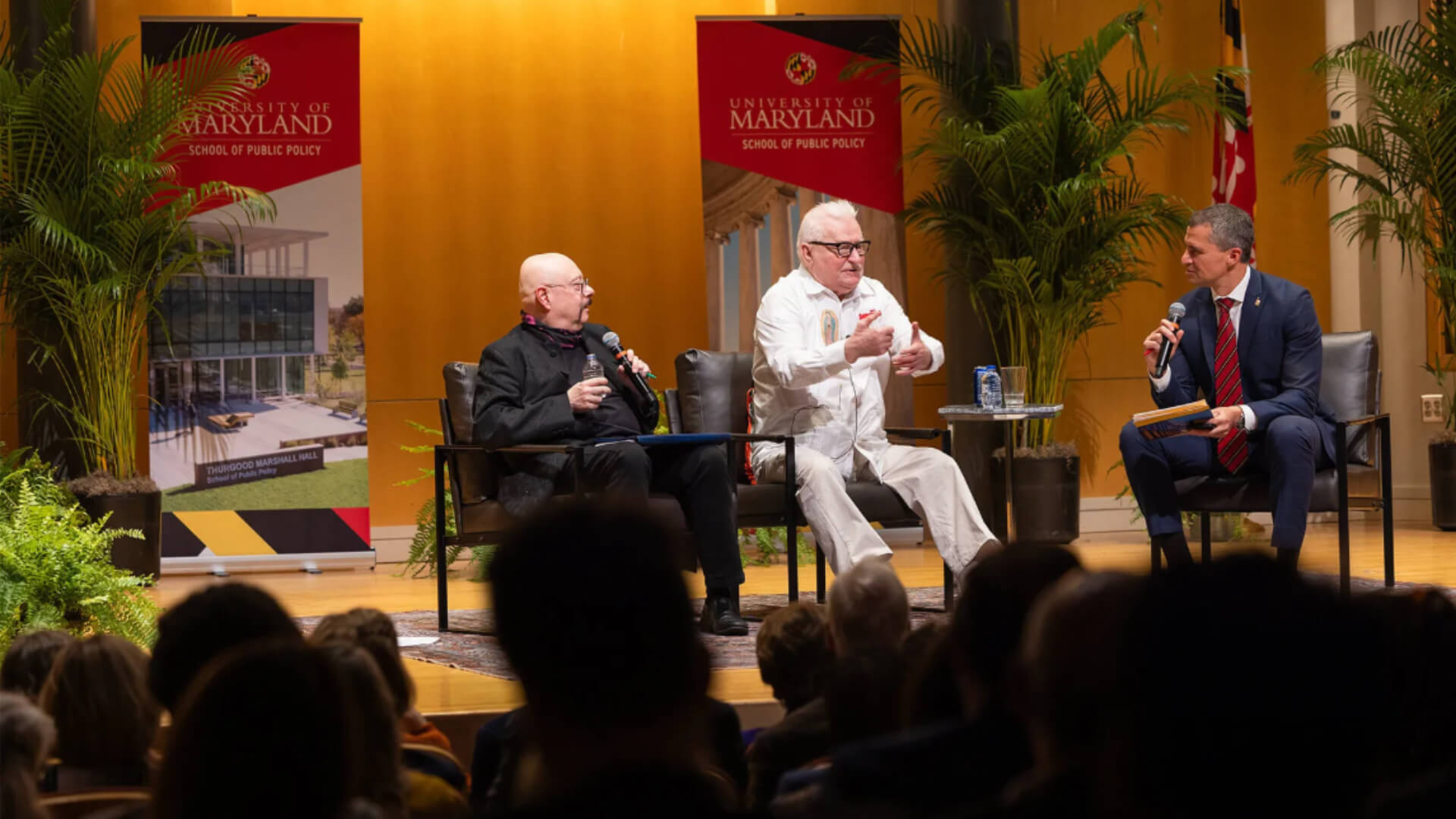
Gallagher, alongside Pavel Palazhchenko (Mikhail Gorbachev’s interpreter at the 1986 summit) and Svetlana Savranskya (George Washington University), reflected on whether adversaries can still engage in diplomacy 40 years after Reykjavik. Each offered lessons from history to break the current downward spiral.
Before the summit, Gorbachev and Reagan traded ambitious but mutually incompatible arms control proposals. Gorbachev unveiled a three-stage plan for total elimination of nuclear weapons by the year 2000. Reagan proposed deep cuts in strategic missiles, a multi-year commitment to remain in the Anti-Ballistic Missile (ABM) treaty while developing technologies for the Strategic Defense Initiative and the elimination of intermediate-range nuclear forces (INF) belonging to the superpowers. Neither side expected a favorable response to their offer.
Palazhchenko recounted a plan for Gorbachev to blame Reagan for perpetuating fears of nuclear annihilation by rejecting the Soviet’s disarmament proposal. However, the two leaders came close to agreement on deep strategic cuts, elimination of INF in Europe and a ten-year moratorium on ABM treaty withdrawal. They disagreed on one important point: whether space-based missile defense technologies could only be tested in laboratories or were not covered by treaty restrictions. Secretary of State George Schultz told journalists that the summit had been a failure, but Gorbachev decided to emphasize the positive by announcing that the two leaders had agreed on the goal of a world without nuclear weapons.
Savranskya detailed how Reagan and Gorbachev pushed through institutional skepticism and clashing expectations to advance their shared objective. By the end of 1987, Reagan and Gorbachev had signed the INF treaty and negotiators were making progress on the 50% strategic cuts enshrined in the 1991 Strategic Arms Reduction Treaty.
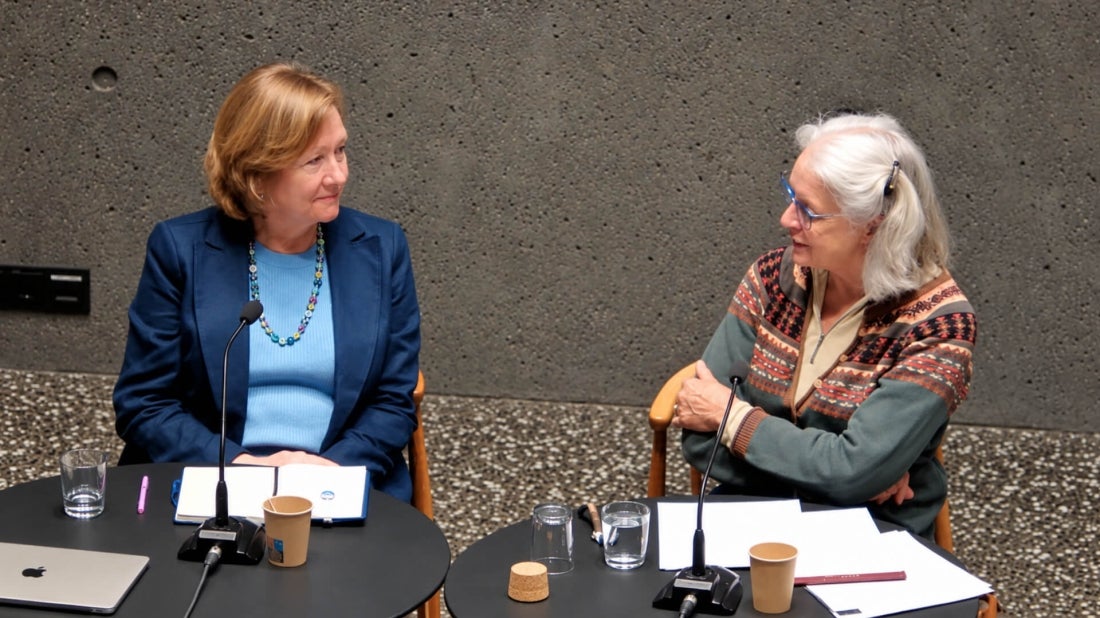
Applying historical lessons to the present day, Gallagher argued that revitalizing diplomacy requires a break from the zero-sum mindset dominating great-power relations and a return to the principles of cooperative security.
Today’s friction, she observed, stems from how each side interpreted the end of the Cold War. Washington convinced itself that U.S. military and moral dominance had prevailed. Gorbachev believed that the two superpowers had decided to curtail costly competition and build a new relationship grounded in common security. Since then, U.S. leaders have tried to use superior military power and economic coercion to force other governments to accept U.S. dictates. Gallagher noted that such tactics rarely work and both Russia and European allies view this as violating the post-Cold War security order they thought they were building.
With the world facing a crisis reminiscent of the early 1980s, Gallagher stressed that genuine alternatives will not emerge from rhetoric alone. Nor are they the exclusive domain of nuclear superpowers. There is "no correlation between hard capabilities and the ability to think creatively," she said. Middle powers and independent thinkers have an urgent role to play. Progress demands both vision and hard work, she insisted, challenging scholars and practitioners to not view the elimination of nuclear weapons as a distant goal, but to craft a "concrete plan from how we get from where we are today to where we want to be."
To bridge vision and reality, Gallagher referenced work by CISSM former directors John Steinbruner and Catherine Kelleher, and Russian counterparts, Sergey Rogov and Alexey Arbatov. Gallagher argued that durable cooperative security is grounded in principles of reassurance, mutual benefit, fairness, transparency and joint decision-making. She challenged participants to cooperate not only with like-minded allies, but also geopolitical rivals whose participation is vital to preventing conflict. Finally, she urged diplomats not to settle for "cooperation on the cheap," but to invest in global governance institutions that can adapt in real time, build shared capacity and hold states accountable.
These cooperative security arrangements seemed more attainable in the 1990s and early 2000s, when Steinbruner and Gallagher started the Advanced Methods of Cooperative Security Program at CISSM than they do today, but they may be the only way to get to “yes” on today’s toughest security challenges. However, forty years after Reykjavík shows what political imagination could conceive. CISSM and ACONA have a shared mission to inspire the next generation of cooperative security experts and equip them with the knowledge, skills and relationships needed to achieve surprising results.