The escalating conflict with Iran is forcing policymakers and analysts to reconsider long-standing assumptions about U.S. strategy in the Middle East and the risks of a wider regional war. Those issues were at the center of a recent virtual discussion hosted by the School of Public Policy, where scholars and policy practitioners examined how the conflict developed and what may come next.
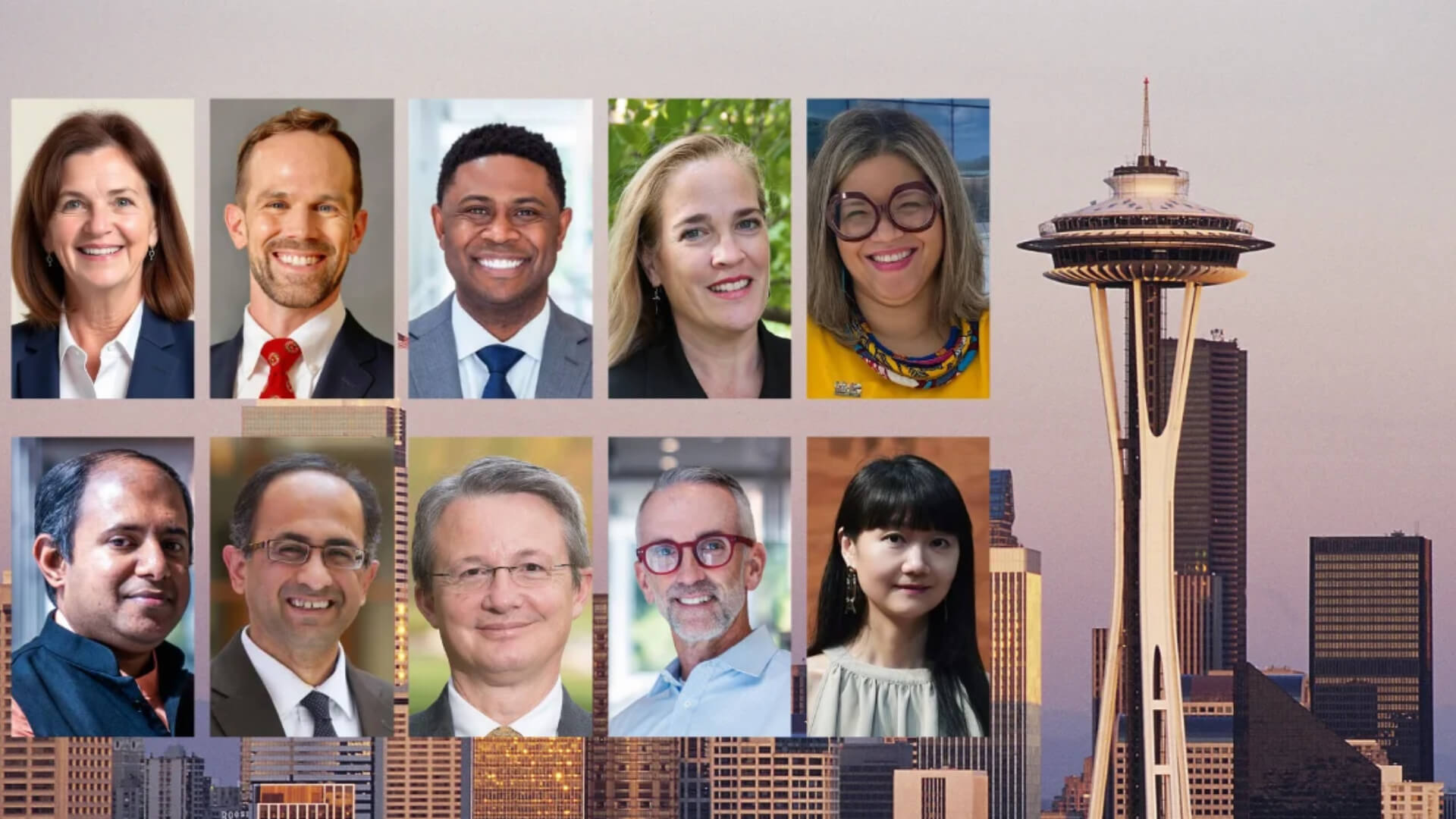
Joshua Shifrinson, program director of the new Foreign Policy, Strategy and Statecraft Program, moderated the event and emphasized that the goal was to step back from daily headlines and examine the broader strategic questions surrounding the conflict.
The discussion also examined the military dimensions of the conflict. Panelist Lt. General Douglas A. “D.A.” Sims II, USA (Ret.), who recently served as director of the Joint Staff, said the scale of the current operation stands out even without the large troop deployments seen in earlier wars. “The focus of what we’re doing is very different,” he said. “Probably the largest air campaign that we’ve seen there since the invasion of Iraq.” Sims said the campaign is targeting missile systems, nuclear infrastructure and naval capabilities, though questions remain about the full extent of Iran’s remaining military capacity.
Catherine Worsnop, faculty director of the new Bachelor of Arts in Global and Foreign Policy, guided part of the discussion toward the strategic consequences of the conflict, including the potential impact on nuclear proliferation and regional security dynamics.
Nancy Gallagher, director of the Center for International and Security Studies at Maryland, said military action may have strengthened domestic support in Iran for expanding the country’s nuclear capabilities. “The military action has not had the desired effects on either Iranian public opinion vis-a-vis the nuclear program or support for the regime,” she said. “Here I’m going to argue that it’s been downright counterproductive.”
The panel also examined how the conflict could shape global geopolitics. Robert Daly, director of the School’s Program on China and the United States, said many countries are responding not only to U.S. actions but also to broader changes in the international order. Daly said the conflict could reinforce China’s efforts to portray itself as a more stable partner on the global stage while the United States becomes further entangled in Middle East conflicts.
Panelists also included Emma Ashford of the Stimson Center and John Hoffman of the Cato Institute, who discussed the regional and geopolitical dynamics driving the current crisis. Ashford said the conflict sits uneasily within the broader direction U.S. foreign policy has attempted to take in recent years. “I think the answer is it doesn’t fit, and yet somehow it does,” she said. “For almost 50 years at this point, Iran has effectively been America’s white whale.”