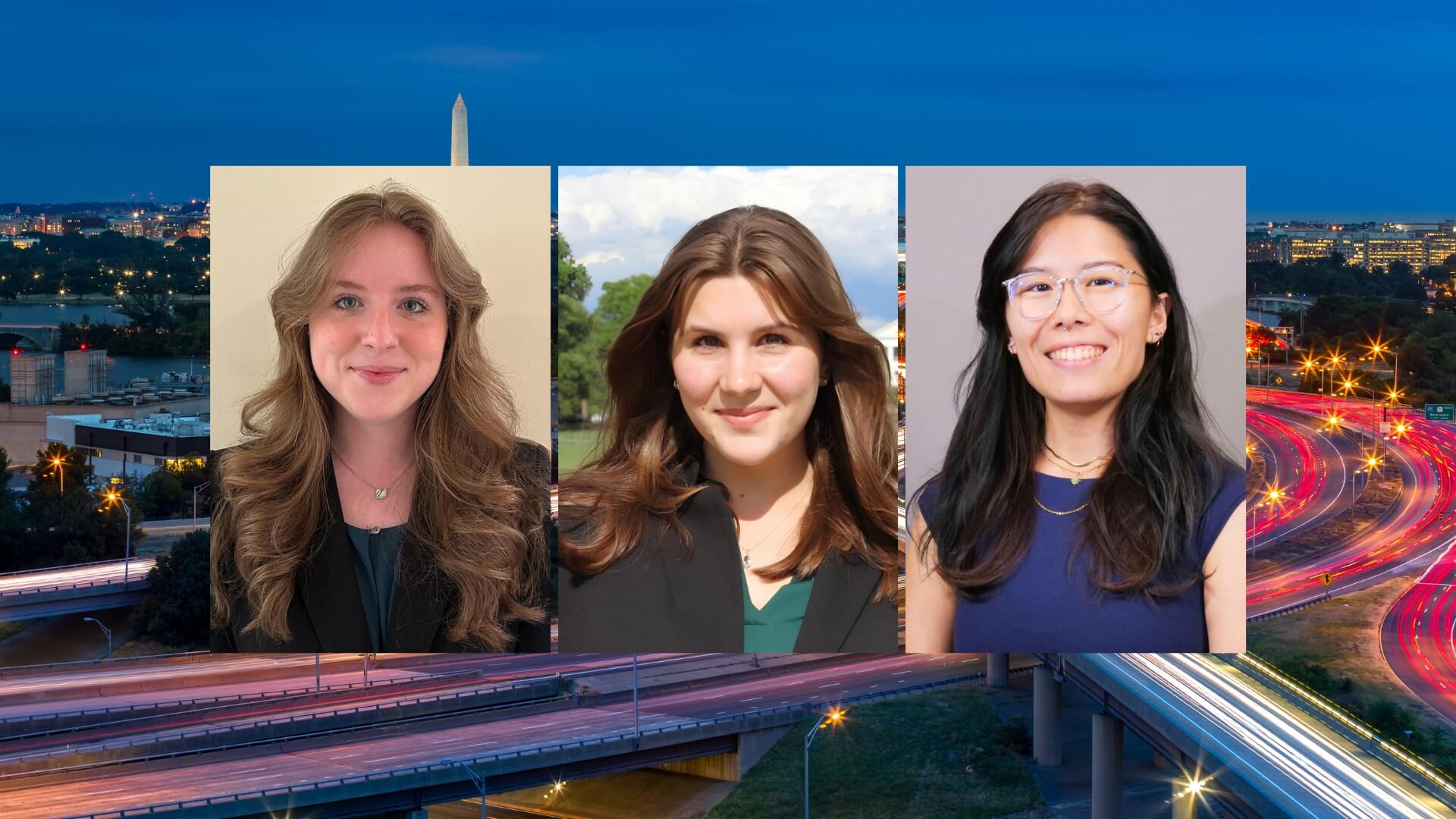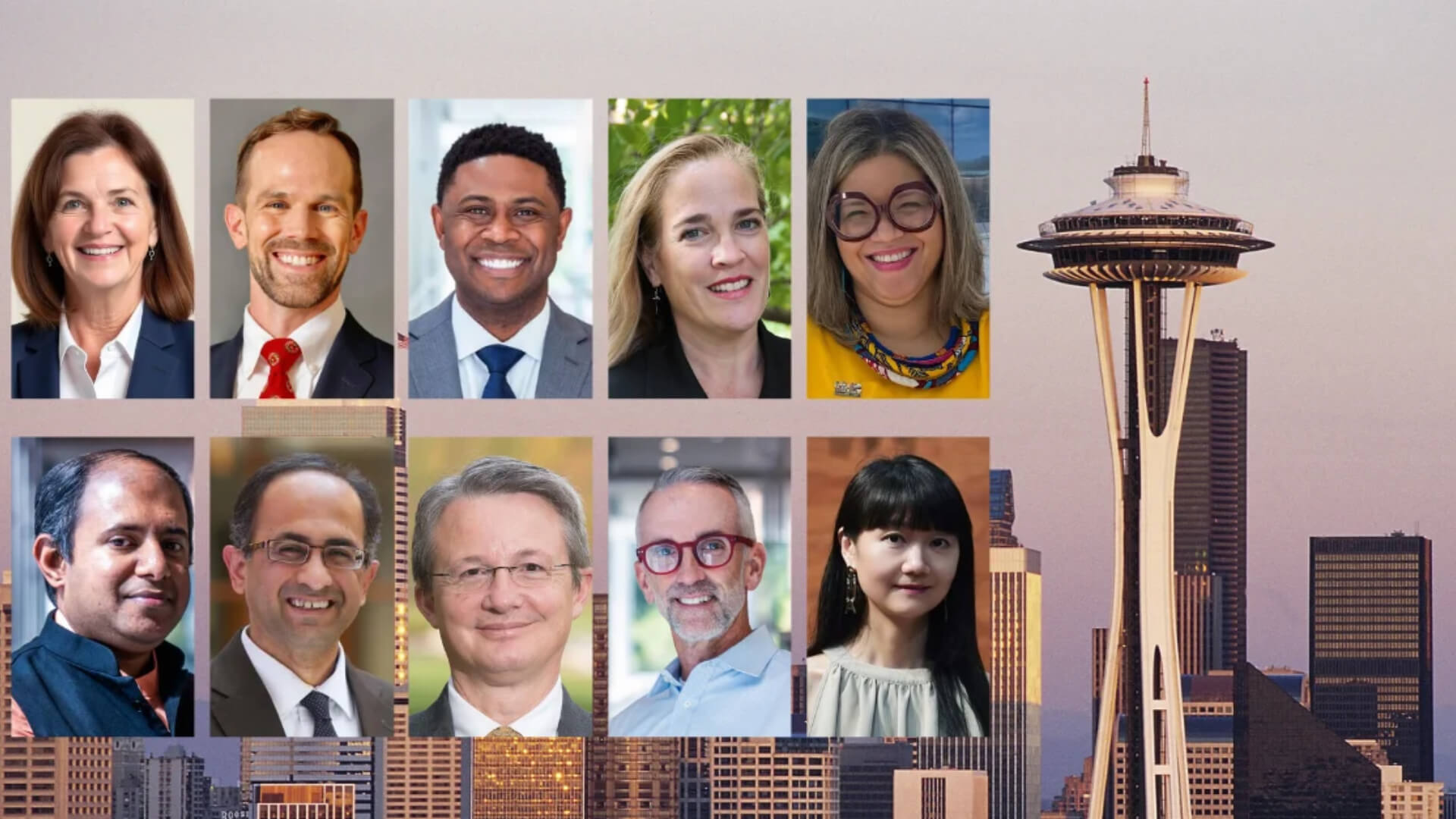
Faculty and researchers from the School of Public Policy participated in the Association for Public Policy Analysis and Management's (APPAM) 2026 Fall Research Conference, held November 5–7 in Boston. This year’s theme was “Fifty States, Fifty Systems: State Policy Variations and Impacts.” Nine members of the School participated in sessions examining topics ranging from government budgeting and artificial intelligence to Medicaid expansion, energy infrastructure and illicit drug markets.
Professor Lucy Qiu presented research during the session “Infrastructure, Instability and Health: Local Determinants of Community Well-Being.” Her study examined the relationship between recurring power outages and mental health hospitalizations in Maryland between 2018 and 2023. The findings suggest that more frequent outages, particularly those lasting one to three hours, are associated with increased mental health hospitalizations. Qiu also served as a discussant for “How Policy Design and Social Context Shape Energy Behavior and Outcomes.”
Doctoral student Xiaofeng Ye presented “Data Center Growth and Electricity Reliability Beyond Host Communities,” examining how data center development may affect electricity reliability in both host counties and neighboring communities. Using national data on data center development and power outages from 2015 to 2025, her research considers how the benefits of new investment and potential infrastructure burdens may be distributed across communities. Ye also chaired the session “Risk and Insurance in a Changing Environment.”
Saul I. Stern Professor of Civic Engagement Shanna Pearson-Merkowitz presented research co-authored with Liam Malloy during “Revisiting Medicaid Expansion and Work: Labor Supply, Coverage and Economic Adjustment Across Populations.” Their study examined the economic effects of Medicaid expansion under the Affordable Care Act, finding substantial increases in health insurance coverage and access to care. The research also identified differences in labor force participation across populations, increases in health care employment and no detectable effects on state economic output.
Assistant Professor Juan Pablo Martínez Guzmán presented “Same City, Different Pathways: Reframing Policy Diffusion,” co-authored with Yaerin Park, during “Performance Management, Budgeting Reforms and Organizational Design.” The study compared the adoption of performance budgeting and social equity budgeting reforms in Chicago, Kansas City, San Diego and Tacoma. The findings suggest that performance budgeting reforms tend to spread through professional networks and lessons learned from other jurisdictions, while social equity budgeting reforms are more closely associated with shared values and efforts to address historical inequities.
Doctoral student Salman Alam presented “The AI Adoption Paradox in Public Administration: Navigating the Infrastructure Trap and Institutional Rigidities,” a study conducted with Martínez Guzmán, during “AI in Public Procurement, Budgeting and Government Operations.” Using Maryland as a case study, their research examined the challenges of incorporating artificial intelligence into government budgeting. The findings highlight how outdated information systems limit the adoption of advanced AI tools and raise questions about accountability and decision-making in automated government processes. Alam also chaired “Federalism in Times of Crises: Intergovernmental Coordination and Fiscal Transfers.”
Distinguished University Professor Peter Reuter and Kasey Vangelov PhD ’26 presented research during “Measuring Illicit Fentanyl Markets and Evaluating Overdose Intervention.” Reuter examined whether disruptions in the illicit fentanyl supply chain help explain the sharp decline in overdose deaths beginning in 2023. Vangelov presented research conducted at UMD under Reuter's National Science Foundation grant, analyzing Reddit discussions for evidence of changes in fentanyl availability and quality. Their findings suggest that changes in the illicit drug supply may have contributed to the decline in overdose deaths. Reuter also served as a discussant for “What Happens After Legalization? The Role of Cannabis Policy in Markets, Policing, Youth and Patient Health.”
Professor Douglas Besharov organized and moderated “New Trump Grants Regulations and the Future of U.S. Policy Research,” a roundtable examining proposed changes to federal research grant regulations and their potential implications for grantmaking, research activities and grant termination. Besharov also led the presentation of the 2026 Peter H. Rossi Award, which he administers. This year's recipient, Peter Z. Schochet of Mathematica, was recognized for his contributions to program evaluation, particularly his work on design-based causal inference for randomized controlled trials.
Postdoctoral Research Associate Mel George presented during “Advanced Methods for Causal Inference and Power Analysis,” a session focused on methodological approaches used in policy research and evaluation.
Additionally, as part of APPAM's 2026 PhD Dissertation Award, Emily Dobson PhD ’26 received an honorable mention for her dissertation.
Through their presentations, discussions and research contributions, School of Public Policy faculty, researchers, students and alumni addressed a range of challenges affecting public policy development, implementation and evaluation.