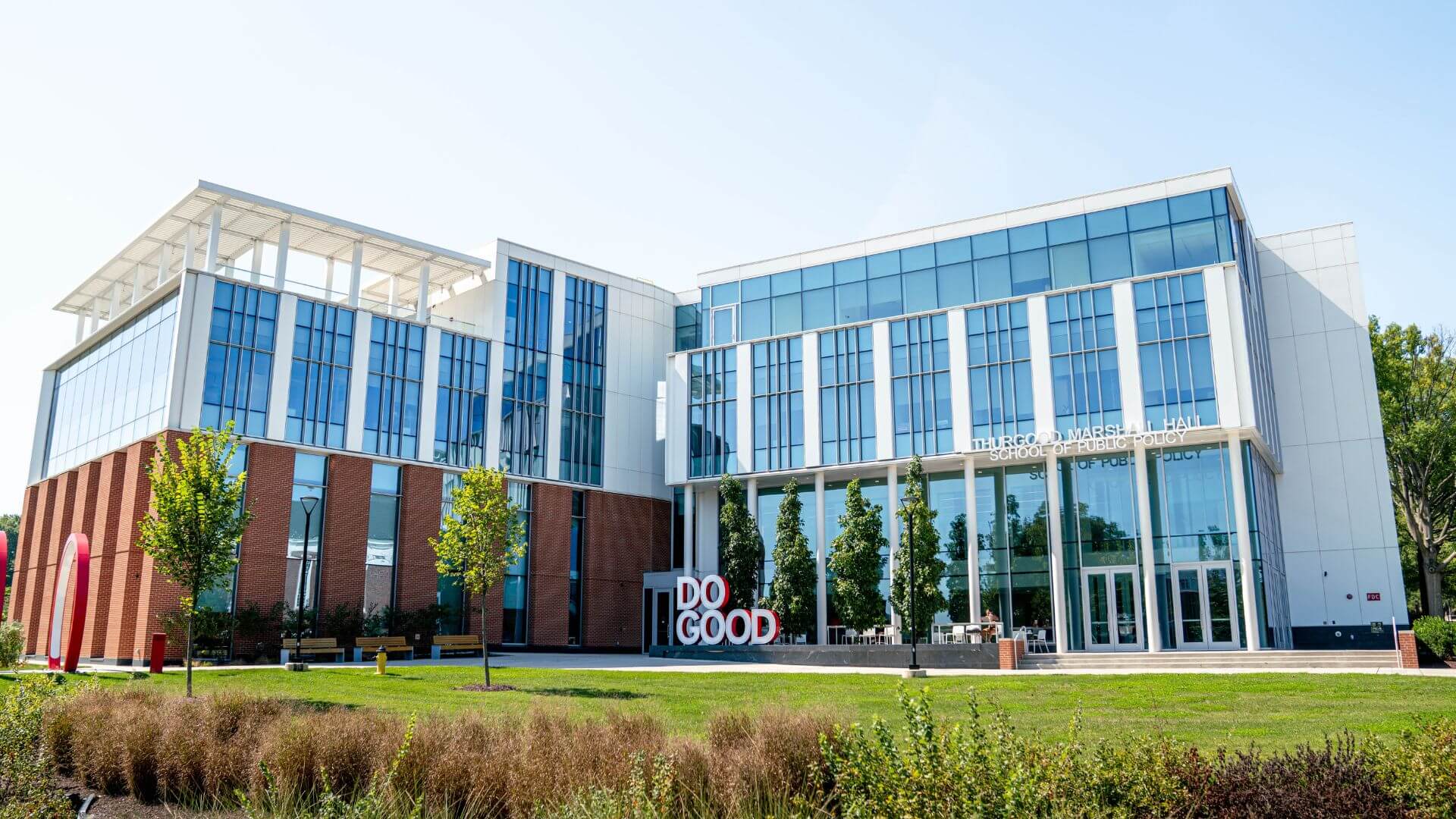
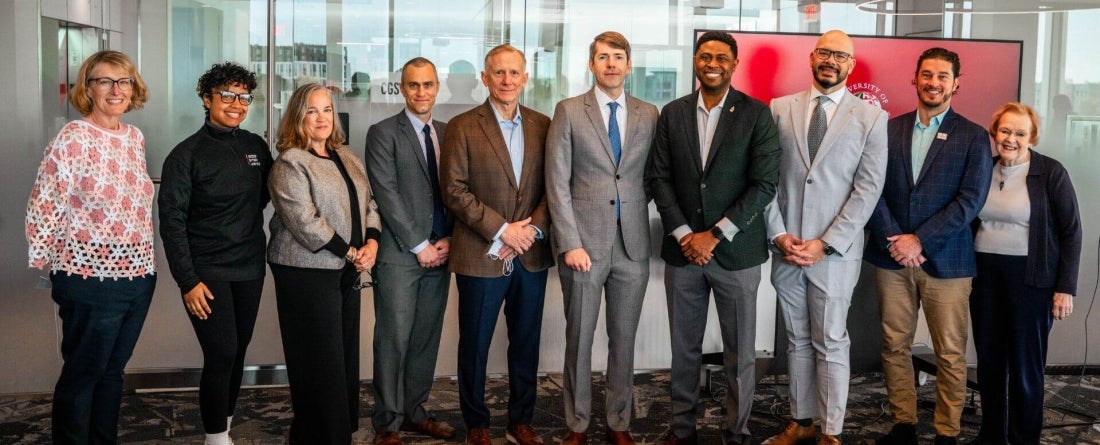
How people engage with public systems—voting, civic participation and the ways they share feedback with government—is a central question in public leadership research. At the Institute for Public Leadership at the School of Public Policy, those questions were a focus of the recent Public Leadership Research Summit.
“The summit’s mission is to promote the work and advance the professional development of early career scholars who are already making significant contributions to public leadership research in the public and nonprofit management disciplines,” said Cullen Merritt, associate professor and IPL research director. The sessions were built around works in progress that invited questions, feedback and conversation.
Long Tran of Ohio State University presented research on how to encourage more honest feedback from citizens in government surveys, especially in settings where people may feel pressure to withhold their true views. “Citizens tend to be anxious when asked about sensitive topics like government transparency and government corruption,” said Tran. Samantha Zuhlke of the University of Iowa examined how individuals engage with nonprofits in relation to their connection, or disconnection, from formal political participation.
Other projects focused on questions of access and representation. Stephanie Puello of the University of Miami explored how public opinion shifts around felony disenfranchisement and what that means for election administration. Shahrin Upoma of the University of Minnesota looked at how identity, including gender and religion, shapes giving behavior and support for different types of organizations.
Across the eight presentations, a common thread was how people experience public systems and how those experiences shape participation, trust and outcomes. IPL Director John Ronquillo noted that the summit is meant to create space for scholars to engage with those questions while building relationships that extend beyond a single event. He also pushed participants to think about the kind of leadership their work reflects, which is less about visibility and more about the steady, often unseen work that moves policy forward.
That idea carried into professional development panels featuring faculty from across institutions, where the conversation turned to the realities of academic careers—how scholars make decisions about jobs, shape their research agendas and balance collaboration with individual identity. Panelists spoke candidly about uncertainty, tradeoffs and the importance of finding environments that support both the work and the person doing it.
Alongside the research sessions, dedicated mentor-mentee meetings paired early-career scholars with more senior researchers for open-ended conversations about navigating the field.
The summit brought research and practice into the same room with much of the work still taking shape, influenced in part by the conversations happening there.