

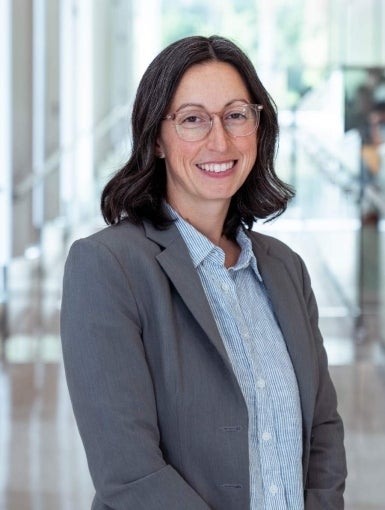
Associate Professor Catherine Worsnop has been appointed an associate editor of Politics and the Life Sciences, a peer-reviewed journal that publishes research at the intersection of politics, public policy, public health and the life-sciences. The appointment, noted Worsnop, comes at a time when public health crises are increasingly shaped by political decisions, not just scientific ones. The COVID-19 pandemic made that reality visible to a wide audience.
Worsnop’s research examines international cooperation in global health, focusing on how politics within states and at the World Health Organization (WHO) shape the global response to major disease outbreaks. That work shows that technical investments, such as improving disease surveillance systems to improve outbreak response are necessary but often insufficient on their own. Political and economic considerations can also shape how governments respond in practice.
Research published in Politics and the Life Sciences, said Worsnop, can help policymakers better understand the interplay between science and politics to design more effective interventions. Studies in the journal address issues such as biosecurity, the ethics of public health decisionmaking and how the life-sciences can help to better understand political outcomes.
As an associate editor, Worsnop said she hopes to encourage research that examines the politics of health and life-sciences policy across levels of government, reflecting both her own work and the School of Public Policy’s emphasis on connecting local, national and global issues.
She also highlighted the role of academic research during fast-moving crises, when leaders are forced to act with incomplete information. “Being explicit about assumptions and the context under which a policy is supposed to have its intended impact is a key part of good academic research,” said Worsnop. That clarity, she added, can help governments explain uncertainty to the public and adapt policies as conditions change.